The Schuman Declaration of May 9, 1950 : 75 Years of European challenges, yesterday and today.
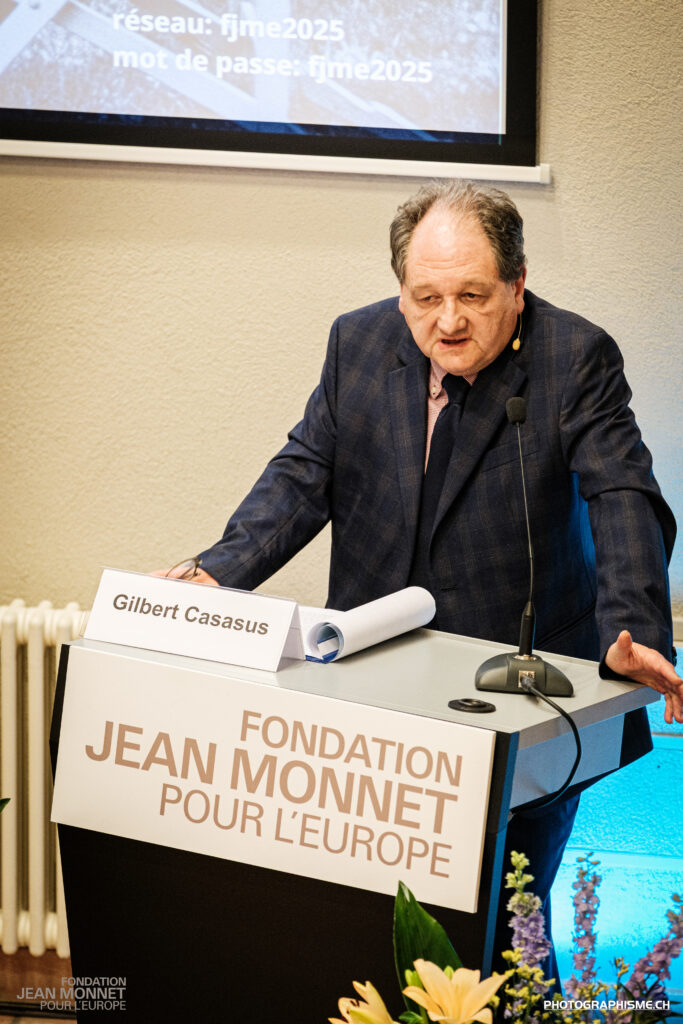
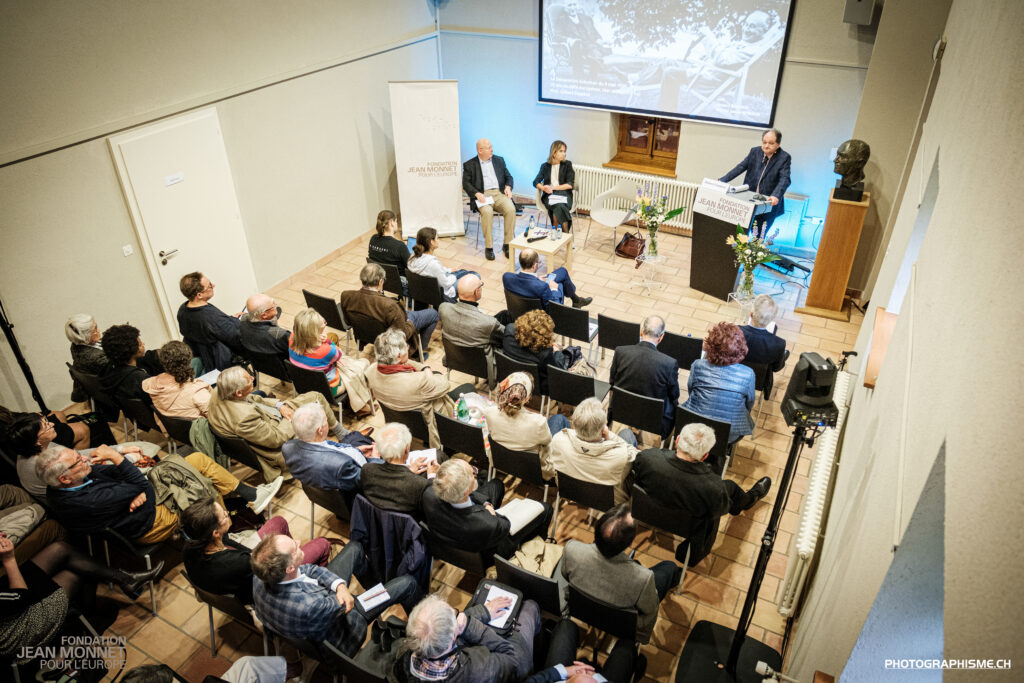
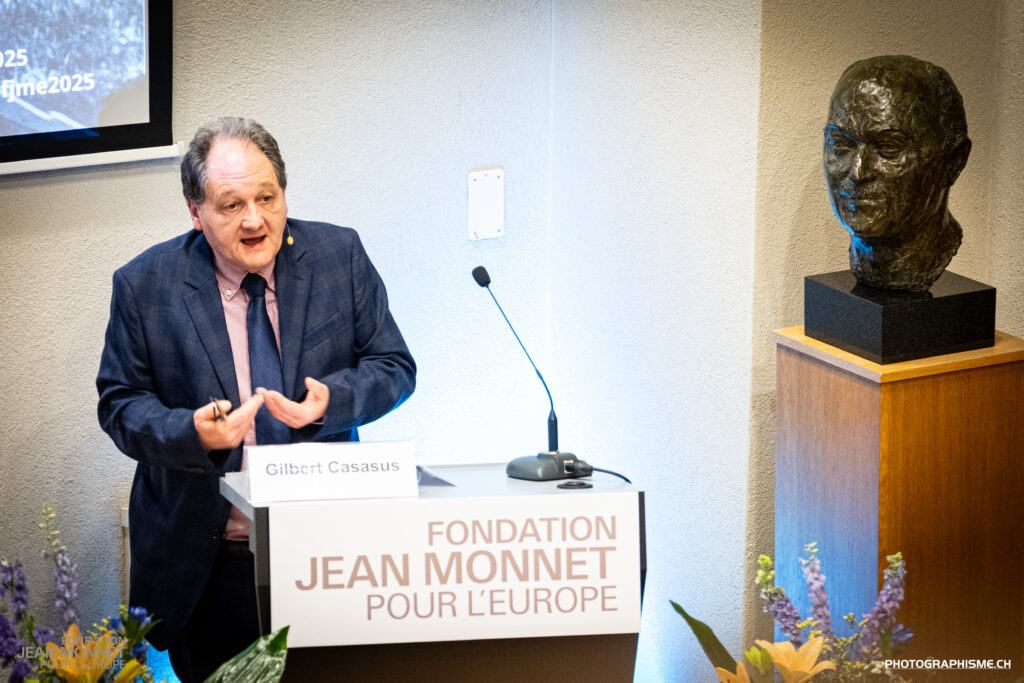
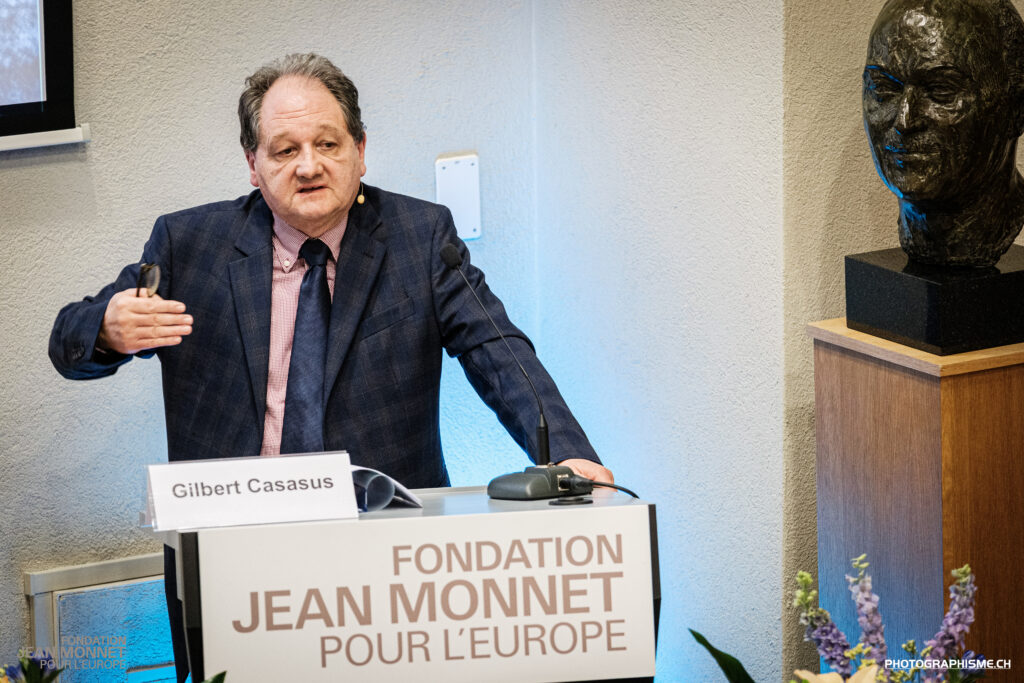
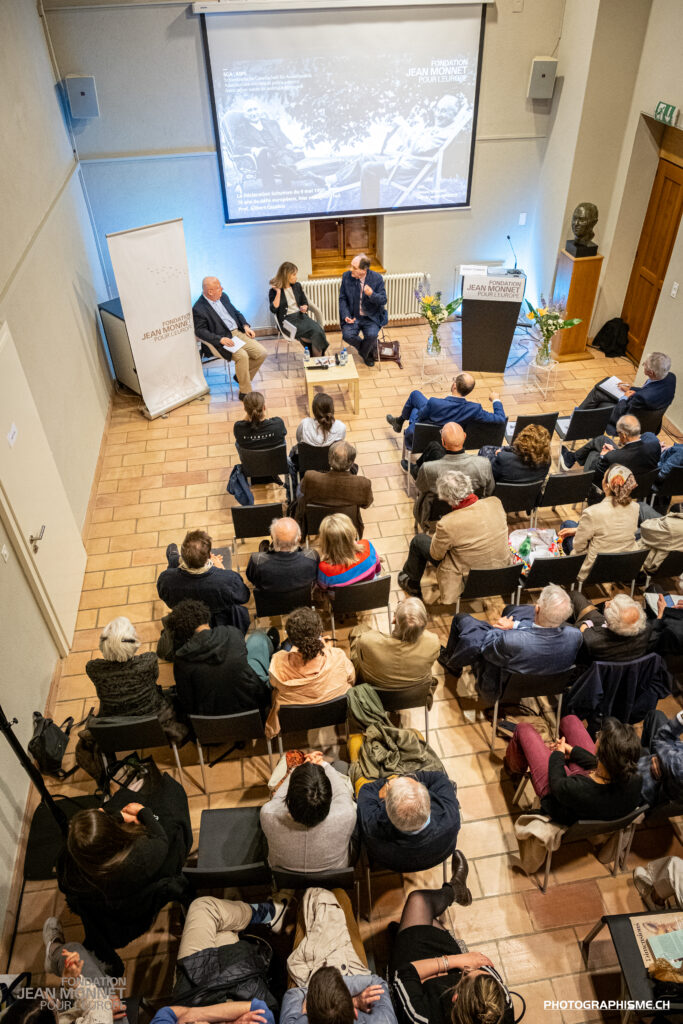
On 6 May 2025, the Foundation welcomed Gilbert Casasus a lecture marking the 75th anniversary of the Schuman Declaration. Watch the film.
On 9 May, 1950, at the beginning of the Cold War and less than a year after the division of Germany, Robert Schuman’s declaration gave birth to the European integration process. The European Coal and Steel Community (ECSC), whose idea was championed by Jean Monnet, was the first treaty in a history few believed in at the time. From six members, the European community grew to 27 member states. However, an essential historical perspective alone is not enough to understand and analyze an era of peace, but also of rivalries and power struggles, which eventually became an epic. Instead of focusing solely on 75 years of European construction, let us focus on the analysis of a concrete situation, despite the challenges that a European Union, perhaps insufficiently prepared, must now address without ever forgetting why it was created and, above all, never giving up on its raison d’être.
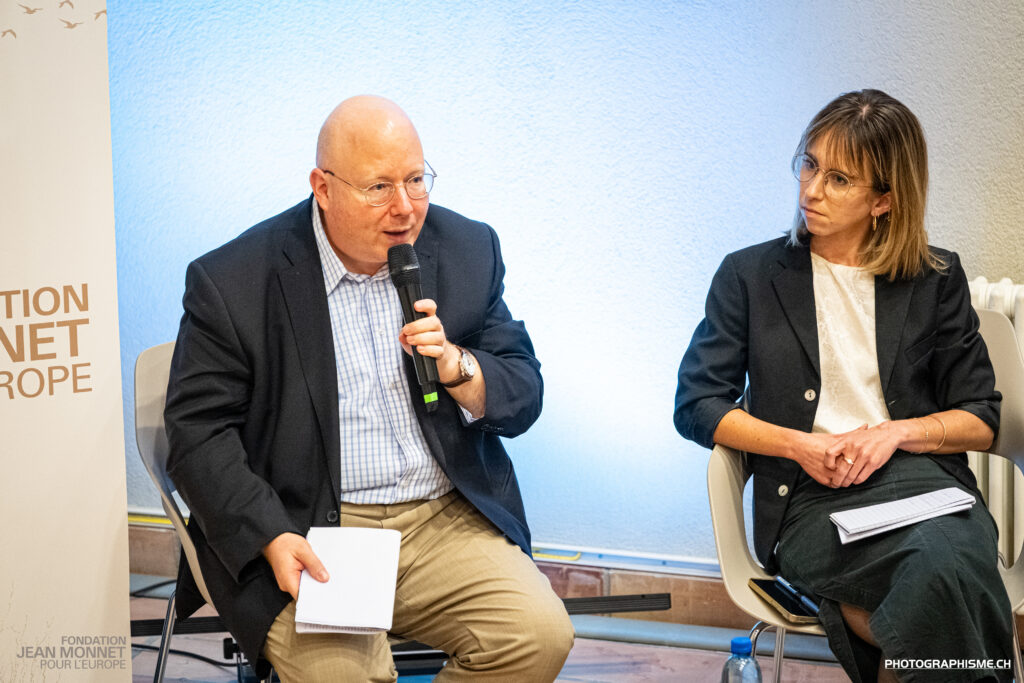
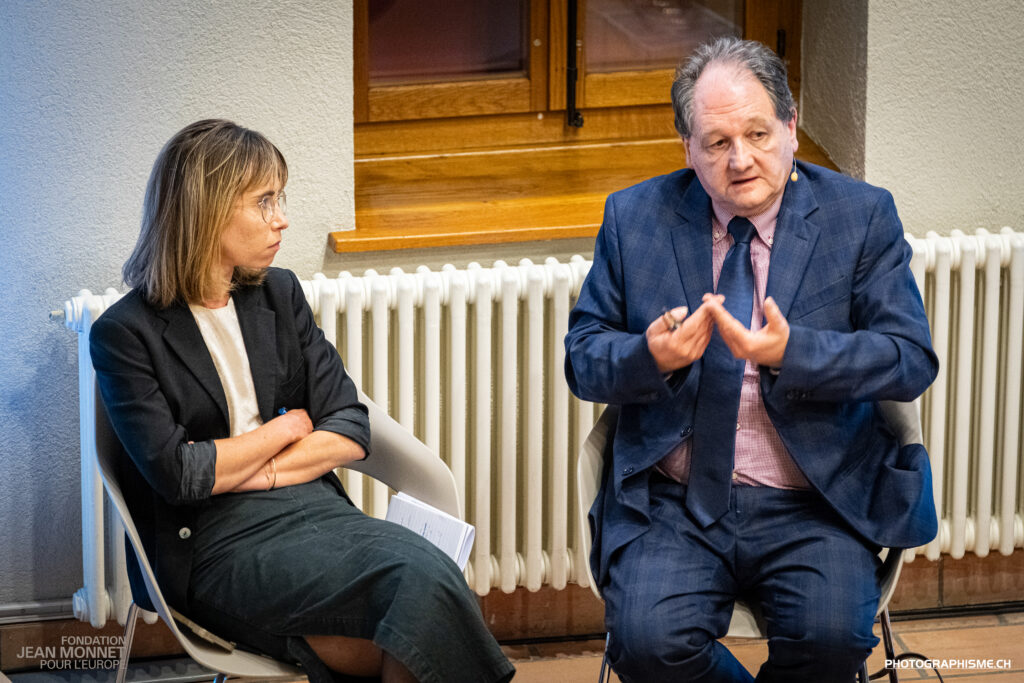
To mark the 75th anniversary of the Schuman Declaration, Gilbert Casasus, historian and political scientist, emeritus professor of European studies at the University of Friboug, explored the origins of the declaration, its historical context, the rationale behind the choice of founding countries, the significant role of Christian democracy at the time, and the complexity of French-German relations.
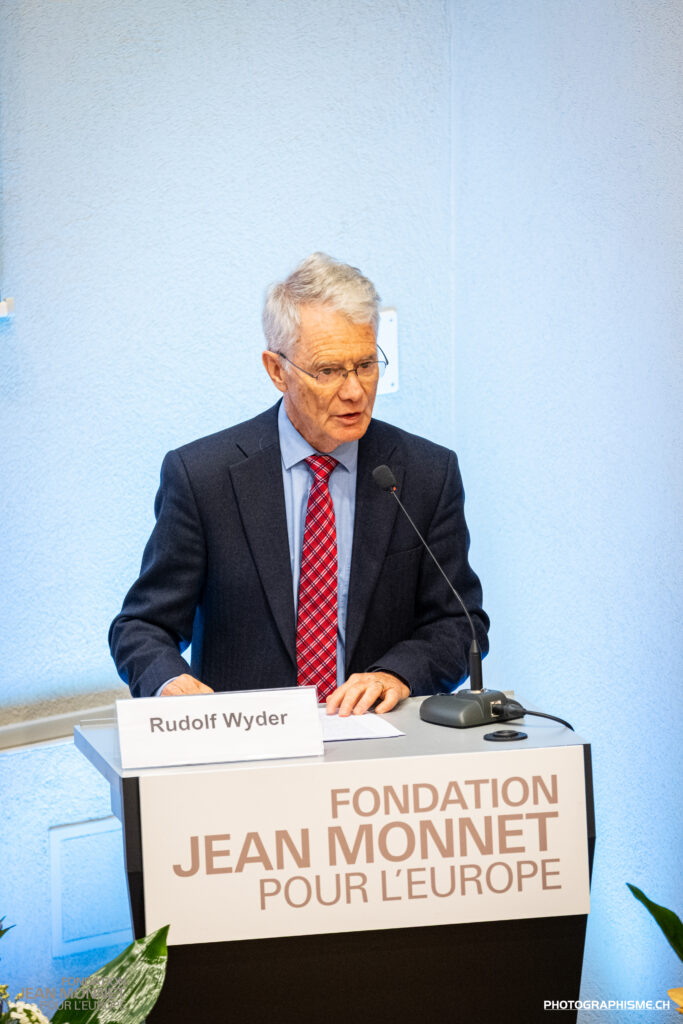
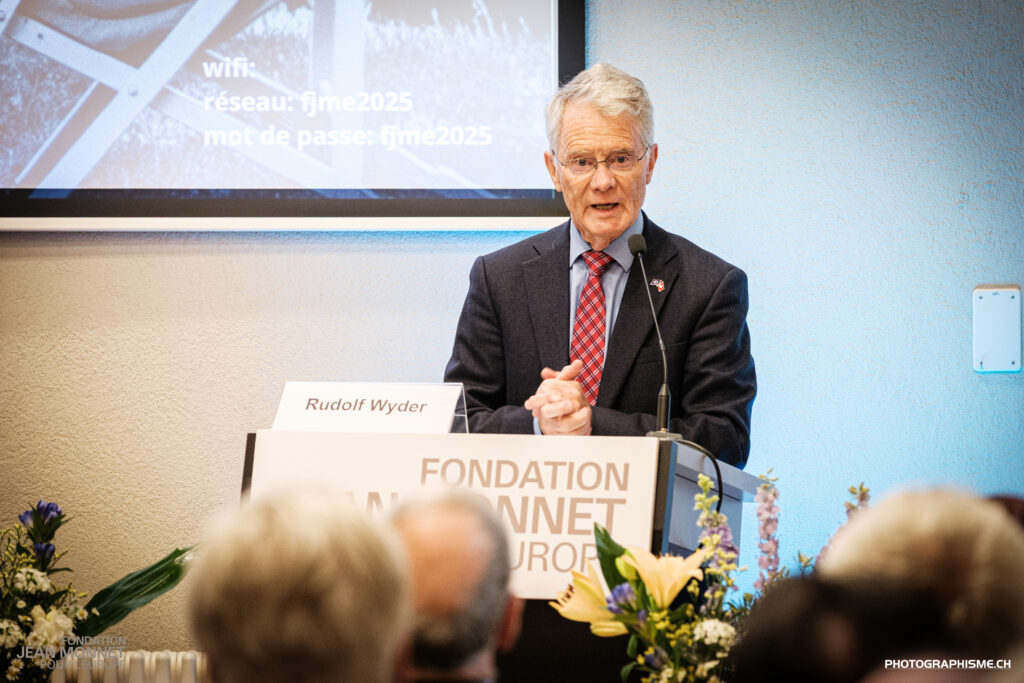
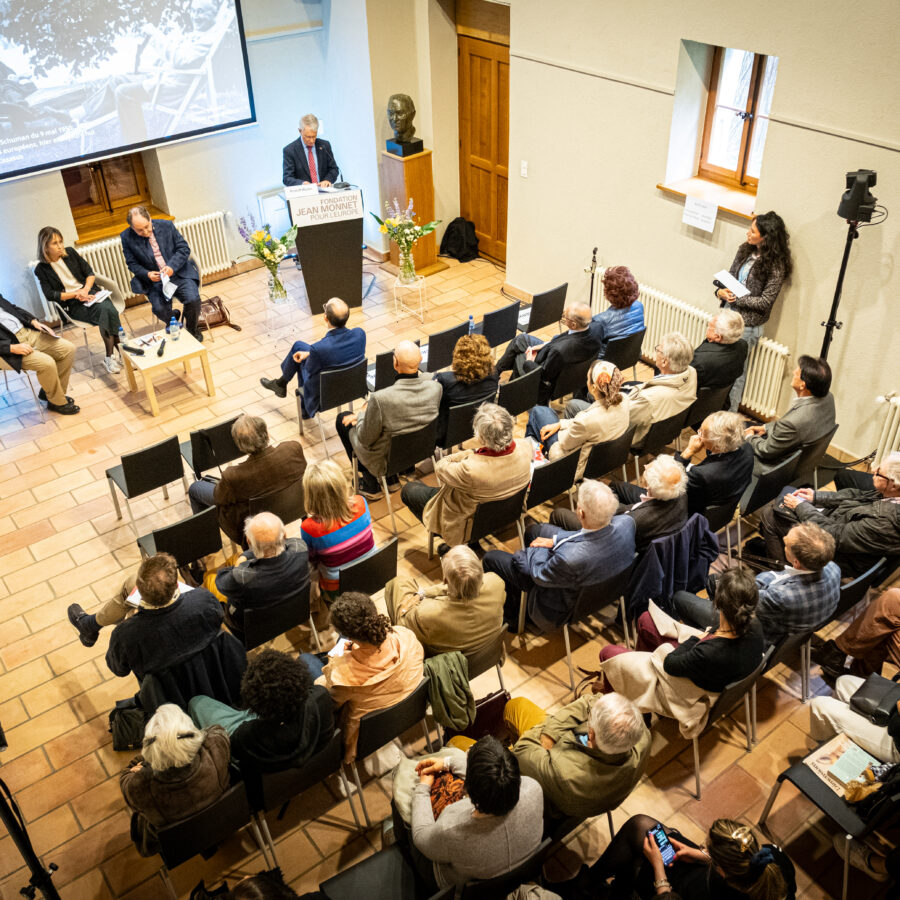
The event opened with remarks by Rudolf Wyder of the Swiss Society for Foreign Policy (ASPE/SGA), who reviewed the reaction of the Swiss authorities at the time of the declaration’s signing.
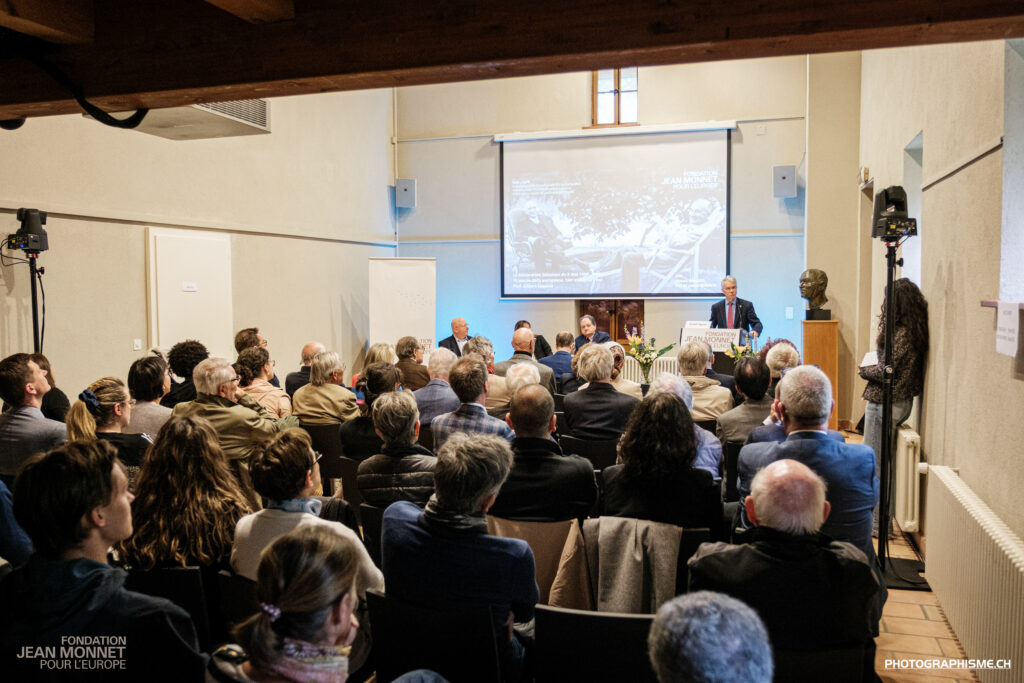
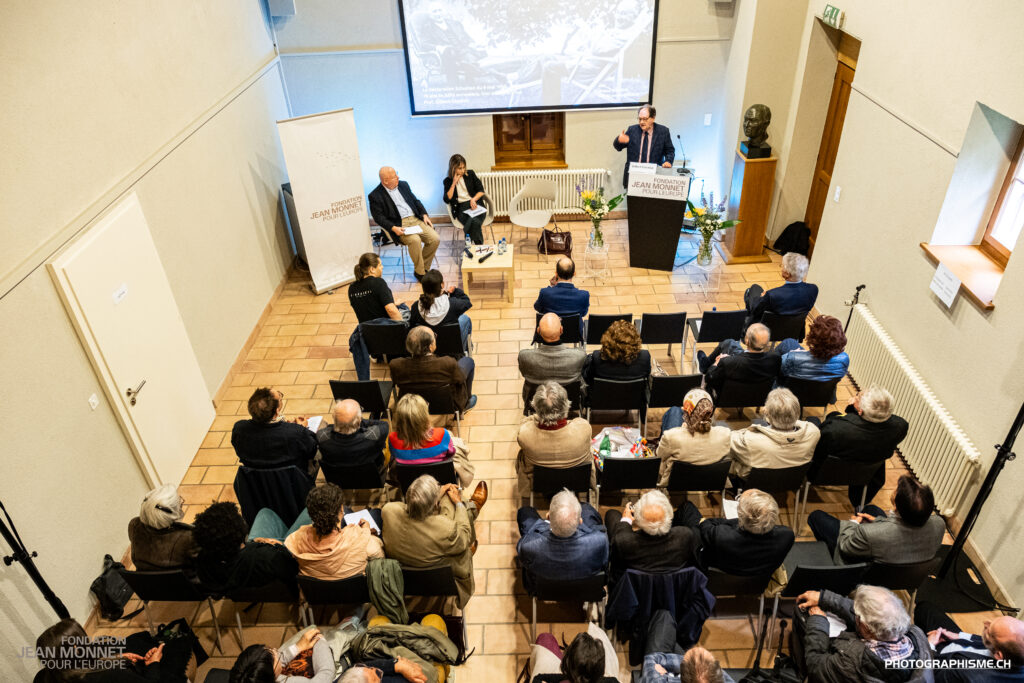
The lecture, co-organized with the ASPE/SGA, took place at the Foundation’s premises at the Ferme de Dorigny (University of Lausanne campus). It was moderated by Gilles Grin and Lucie Du Pasquier and concluded with a public Q&A session.
With the support of the University of Lausanne and the Loterie Romande